 EN
EN


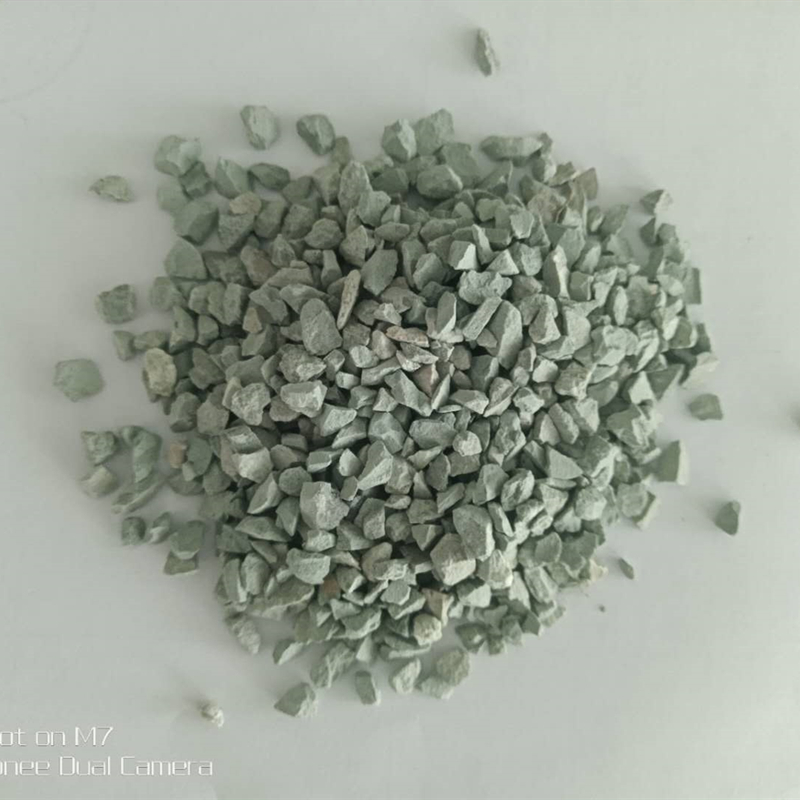
Evaluate Production Scale and Operational Performance
Assess throughput capacity, batch-to-batch uniformity, and scalability for continuous industrial deployment
When looking for a good zeolite manufacturer, there are three main things to check first. The company should handle at least 5,000 metric tons per year for bulk orders. Their batches need to stay consistent too, with no more than 3% variation in important specs such as how the particles are sized. And they must have solid plans in place to scale up production quickly if needed, ideally capable of boosting output by 30% when markets change. Factories that partner with suppliers who maintain Six Sigma standards for process control see about 18% better performance in their own operations. Look for manufacturers with modular reactor setups and automatic quality checks built into their processes these systems stop production slowdowns when demand suddenly jumps. Something else worth checking is how well they manage their supply chain. Industry leaders typically keep enough raw materials on hand to cover 90 days of operation. This buffer prevents costly shutdowns that can cost companies around $740,000 each day according to research from the Ponemon Institute back in 2023.
Validate real-world performance: adsorption kinetics, regeneration cycle endurance, and service life under thermal/chemical stress
When looking beyond standard laboratory specs, it's important to ask for accelerated aging reports that simulate actual operating conditions. High quality zeolites reach about 95 percent VOC saturation pretty quickly, around 12 minutes at 30 degrees Celsius, and still hold onto over 85 percent of their adsorption power even after going through 500 regeneration cycles in PSA systems. To check how well they handle heat, thermogravimetric analysis (TGA) is needed. This confirms structural changes stay below 10 percent after repeated exposure to temperatures as high as 600 degrees Celsius. On the chemical front, look for 5000 hour immersion test results in real world process streams, such as those found in acidic scrubber solutions. Companies that can show third party verified stress testing usually end up cutting down on replacement expenses by roughly 40 percent when compared with suppliers who haven't gone through certification processes.
Verify Critical Zeolite Quality Parameters
Selecting a qualified zeolite manufacturer requires rigorous validation of three non-negotiable material properties to ensure industrial-grade performance in demanding applications like catalysis, gas separation, and ion exchange.
Confirm cation exchange capacity (CEC) ≥ 500 meq/100g for high-efficiency ion exchange applications
The cation exchange capacity or CEC basically tells us how well a zeolite can swap out ions, which is really important stuff when it comes to cleaning up wastewater, recovering metals, and managing nutrients in soil. Most experts agree that anything under 500 milliequivalents per 100 grams just won't cut it for getting rid of those nasty contaminants like lead, ammonium, or various heavy metals we find in contaminated water sources. If materials fall short of this mark, they need about 30 percent more regeneration cycles, which means more chemicals used and longer periods where the system isn't running at full capacity. When shopping around for quality products, make sure to ask for those official lab reports that show proper CEC testing was done according to the standard method using ammonium acetate displacement as outlined in ISO 11260:1998 specifications.
Test thermal stability up to 600°C via TGA-DSC and correlate results with catalytic or desiccant longevity
The TGA-DSC method helps measure how materials hold up when exposed to intense heat conditions. When zeolites keep their crystal structure intact at around 600 degrees Celsius, they can last through over ten thousand regeneration cycles inside things like catalytic reactors or drying towers. If the material starts breaking down before reaching that temperature threshold though, pores begin collapsing much faster which cuts down on service life by roughly forty percent for equipment used in refineries or petrochemical plants. For accurate predictions about actual performance during repeated heating cycles, it's important to look at both TGA-DSC results alongside data from accelerated aging tests, not merely focusing on those peak decomposition points.
Map pore structure consistency using nitrogen physisorption (BET surface area ±5% lot-to-lot tolerance)
When we apply nitrogen physisorption using the Brunauer-Emmett-Teller (BET) method, it gives us important data on total surface area, micropore volume, and how pores are distributed throughout the material. The geometry needs to stay consistent across batches. We check this consistency through BET surface area measurements that should fall within a ±5% tolerance between lots. If there's variation outside this range, gas separation efficiency drops around 25%, which can really impact performance. For each production run, complete adsorption and desorption isotherms are necessary. These tests should also include t-plot micropore analysis to make sure we're not counting contributions from materials like amorphous silica or binders that aren't actually part of the zeolite structure. Manufacturers who meet these tolerances show they have good control over their synthesis processes. This level of quality control matters a lot in high-end applications where purity is critical, such as in pharmaceutical manufacturing, aerospace components, and semiconductor fabrication where even tiny impurities can cause major problems.
Audit Quality Control Rigor and Batch Traceability
Industrial zeolite sourcing demands unyielding quality verification protocols. Structural failures in catalytic or adsorption systems are rarely attributable to design flaws—and far more often stem from undetected batch variability or impurity ingress. Manufacturers must implement laboratory-grade scrutiny at every stage.
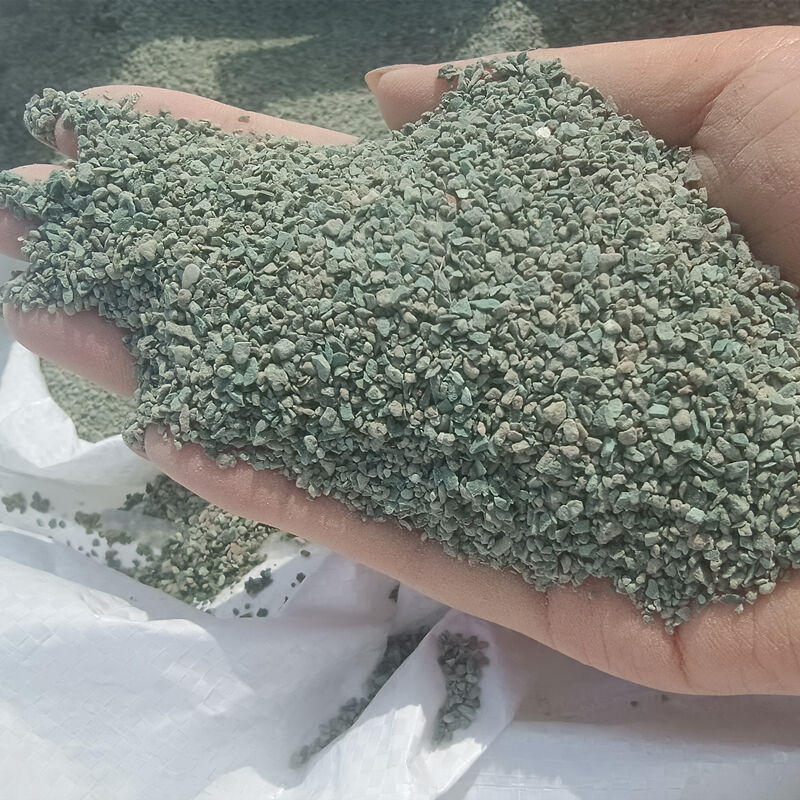
Require XRD Phase Quantification (Rietveld Refinement) to Exclude Amorphous Impurities or Hazardous Phases Like Cristobalite
X-ray diffraction (XRD) analysis with Rietveld refinement is non-negotiable for confirming crystalline phase purity. This technique quantifies phase composition to ±0.5% accuracy, detecting hazardous contaminants such as cristobalite—a polymorphic form of silica linked to reduced thermal stability (up to 40% loss at 500°C) and respiratory hazards. Specifications must mandate:
- Zero detectable amorphous content in synthetic molecular sieves
- Cristobalite thresholds below 0.1 wt%, aligned with ISO 21501-4:2018 for airborne particulate characterization
- Full spectral validation against NIST SRM 640e (silicon) and SRM 676a (cristobalite) reference materials
Demand Full Batch Traceability, CoA Documentation, and Statistical Process Capability (Cpk ≥ 1.33) for Critical Attributes
Comprehensive traceability enables targeted recalls, root-cause analysis, and regulatory compliance—especially in FDA- or EPA-regulated sectors. Blockchain-enabled batch tracking reduces defect resolution time by 34% (Marine Safety Study, 2022). Require:
- Unique digital identifiers (e.g., QR-coded lot IDs) tied to synthesis parameters, raw material certificates, and test logs
- Automated Certificate of Analysis (CoA) generation—including CEC, BET surface area, crush strength, and XRD phase fractions—with tamper-proof timestamps
- Demonstrated statistical process capability: Cpk ≥ 1.33 for pore distribution (Dv50), crush strength, and Si/Al ratio—verified via minimum 30 consecutive lots
Continuous process monitoring through SPC control charts—not periodic spot checks—ensures deviations in hydrothermal synthesis, calcination, or ion exchange are detected and corrected before affecting downstream performance.
Table of Contents
- Evaluate Production Scale and Operational Performance
-
Verify Critical Zeolite Quality Parameters
- Confirm cation exchange capacity (CEC) ≥ 500 meq/100g for high-efficiency ion exchange applications
- Test thermal stability up to 600°C via TGA-DSC and correlate results with catalytic or desiccant longevity
- Map pore structure consistency using nitrogen physisorption (BET surface area ±5% lot-to-lot tolerance)
- Audit Quality Control Rigor and Batch Traceability