 EN
EN


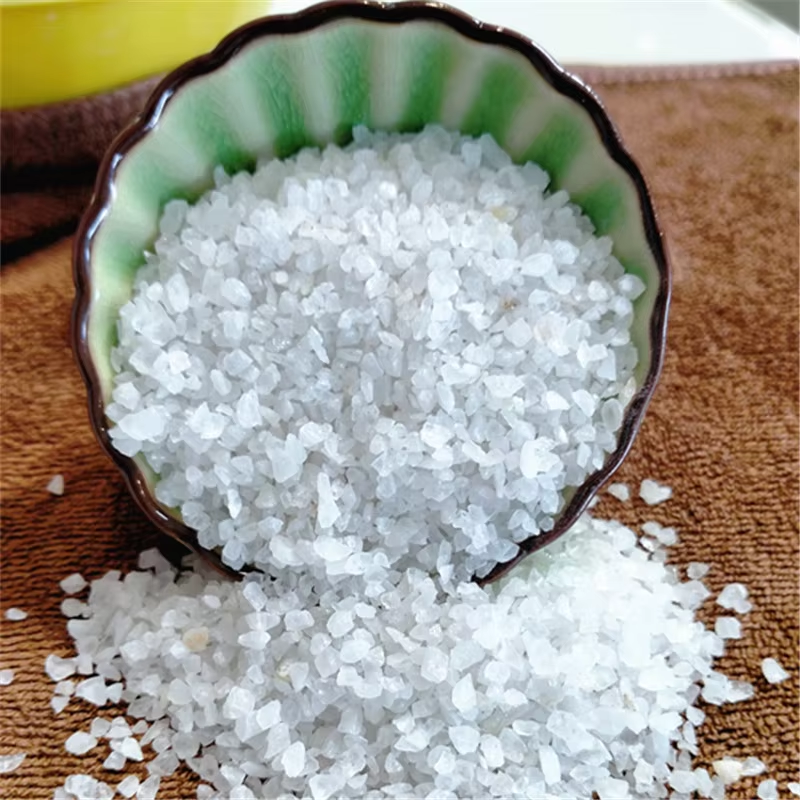
Key Quality Metrics to Consider When You Buy Quartz Sand
SiO₂ Purity and Critical Impurity Limits (Fe₂O₃, Al₂O₃) for Performance Integrity
Silica content is the primary determinant of quartz sand quality. Industrial applications require high SiO₂ purity—typically ≥99.5%, with solar-grade and high-end optical uses demanding ≥99.99%. Iron oxide (Fe₂O₃) is the most consequential impurity: it induces greenish discoloration in glass and reduces melting efficiency by lowering the eutectic temperature. Aluminum oxide (Al₂O₃) degrades thermal shock resistance and can promote devitrification in fused silica products. Acceptable thresholds are application-specific—foundry sands may tolerate up to 0.5% Fe₂O₃, while flat glass requires ≤0.02% and PV-grade quartz mandates near-zero metallic impurities. Always validate purity through accredited lab reports using ICP-OES or XRF analysis—not supplier-provided summaries alone.
Particle Size Distribution, Grain Shape, and Whiteness for Functional & Visual Consistency
Consistent particle size distribution ensures predictable behavior across processing stages. Segregation during handling or feeding is minimized when grains fall within a narrow, application-appropriate mesh range—e.g., 0.5–1.2 mm for filtration media or 40–120 mesh for photovoltaic feedstock. Grain shape governs mechanical performance: angular particles enhance interlocking and binder adhesion in composites and resin-bound surfaces, while higher sphericity (>0.85) improves flowability and surface finish in foundry molds. Whiteness—quantified via CIE Lab* (L* ≥85 ideal for pre-tinted decorative grades)—is directly tied to iron content and washing efficacy. Uniform brightness requires both low Fe₂O₃ (<0.01%) and consistent processing; visual inspection alone cannot substitute for spectrophotometric measurement.
Matching Quartz Sand Specifications to Your Application
Choosing the right grade of quartz sand is not a one-size-fits-all decision. Each application—whether industrial or decorative—demands a unique combination of purity, particle size, shape, and visual properties. Understanding these differences helps you buy quartz sand that performs exactly as needed, avoiding costly over-specification or under-performance.
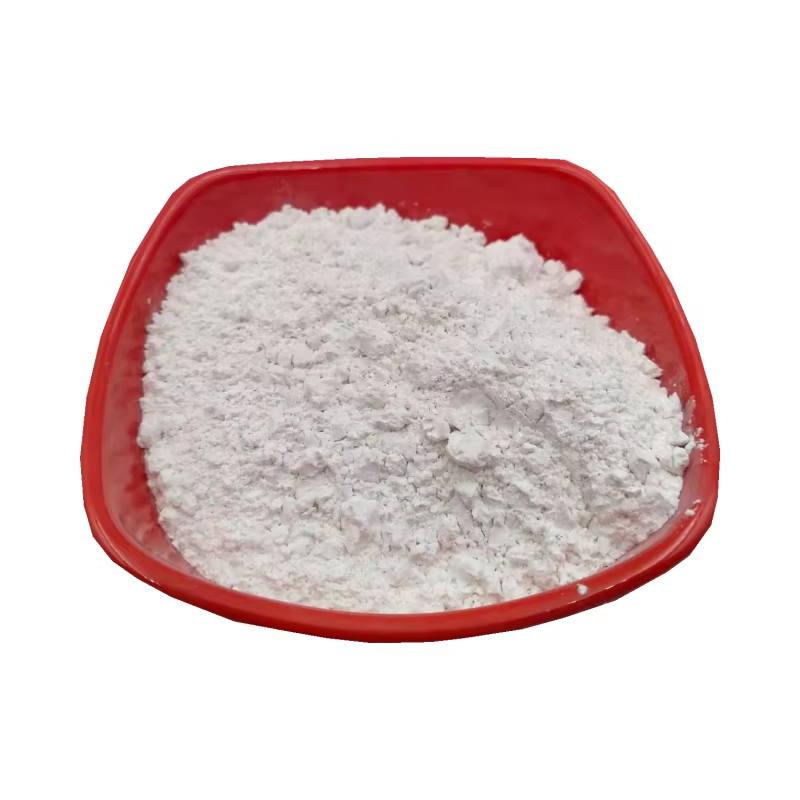
Industrial Uses: Glass, PV, Foundry, and Filtration — Grade-Specific SiO₂, Mesh, and Sphericity Requirements
Industrial sectors impose strict physical and chemical thresholds. For flat and container glass, SiO₂ purity must exceed 99.5%, with Fe₂O₃ held below 0.02% to prevent discoloration and maintain melt homogeneity. Photovoltaic (PV) applications demand ultra-high purity—≥99.99% SiO₂—with trace metals (Fe, Al, Ti) quantified at parts-per-trillion levels to preserve light transmission and minimize electron recombination. Foundry sands require AFS 40–70 grain size and sphericity ≥0.85 for optimal mold surface finish and shakeout. Water filtration systems rely on uniform 0.5–1.2 mm grains with Mohs hardness ≥7 to resist attrition during backwashing. The table below summarizes key parameters for common industrial uses.
| Application | SiO₂ Purity | Mesh Size | Key Shape Requirement |
|---|---|---|---|
| Flat Glass | ≥99.5% | 30–80 | Angular for bonding |
| PV Glass | ≥99.99% | 40–120 | Low angularity |
| Foundry | ≥98% | AFS 40–70 | Sphericity ≥0.85 |
| Filtration | ≥95% | 0.5–1.2mm | Angular for filtration |
Decorative Uses: Landscaping, Resin-Bound Surfaces, and Colored Aggregates — Color Stability and Angularity Guidelines
Decorative applications prioritize long-term visual integrity and mechanical durability. For landscaping, UV-stable pigment coatings must retain color fidelity for ≥5 years—verified through accelerated weathering tests per ASTM G154. Resin-bound surfaces (e.g., patios, driveways) require angular grains with aspect ratios <2.5 and angularity index values between 0.7–0.9 to maximize mechanical interlock and reduce binder creep under traffic. Colored aggregates used in stamped concrete or terrazzo need consistent base whiteness (L* ≥85) and tight particle size control (0.5–2 mm) to ensure even pigment dispersion and avoid mottling. Unlike industrial grades, decorative sands prioritize batch-to-batch color consistency over ultra-trace purity—though residual iron remains the leading cause of premature yellowing.
Reliable Sourcing: Certifications, Testing, and Due Diligence When You Buy Quartz Sand
When you buy quartz sand, verifying supplier reliability protects your production and reputation. Start by requesting certifications relevant to your industry—ISO 14001 (environmental management) and ISO 45001 (occupational health) indicate operational rigor, but confirm they cover quartz sand processing—not just corporate offices. Trace impurity testing must be conducted by an accredited lab using ICP-OES or ICP-MS, capable of detecting Fe, Al, Ti, and Ca at sub-ppm levels. Ask suppliers for third-party test reports tied to specific batch numbers—not generic “typical values.” A reputable supplier will provide full analytical certificates, including particle size distribution curves, sphericity histograms, and CIE Lab* data—not just pass/fail statements. Evaluate their export experience: proven international shipping records signal familiarity with moisture-proof packaging, customs-compliant documentation, and contamination controls during transit. Inquire about acid-washing wastewater treatment—suppliers with closed-loop water systems demonstrate environmental accountability and reduce risk of regulatory noncompliance. Finally, request references from clients in your sector and verify their satisfaction with consistency and responsiveness—not just initial delivery. This level of due diligence ensures every shipment meets your functional, aesthetic, and compliance requirements.