 EN
EN


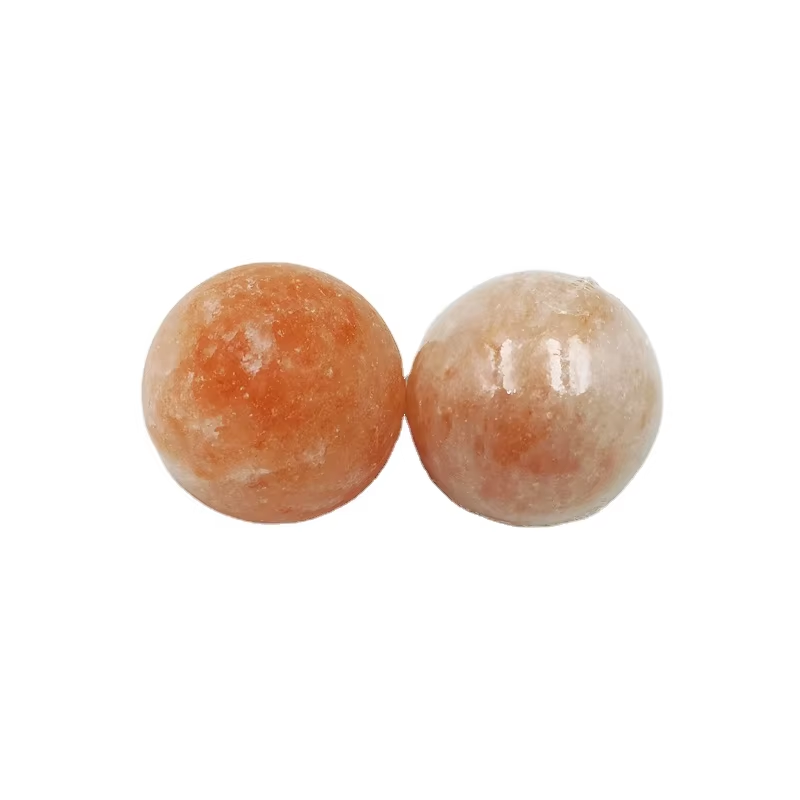
The Ambient Power of Himalayan Salt Ball Lighting
Warm Glow and Chromatic Psychology: Why Himalayan Salt Ball Light Promotes Calm
The warm amber glow emitted by Himalayan salt balls falls within the 2,000–3,000 Kelvin color temperature range—the same spectrum as sunset and candlelight. This wavelength triggers a neurobiological relaxation response: cortisol levels decrease while serotonin rises, supporting physiological calm. In contrast, cool blue lighting (above 4500K) suppresses melatonin and heightens alertness—making it unsuitable for evening wind-down routines. Studies show exposure to warm-toned ambient light can reduce heart rate by 8–11% within 20 minutes compared to standard fluorescent lighting. The soft, crystalline luminance also serves as a sensory anchor during mindfulness practice; 73% of surveyed meditation practitioners reported improved focus when using salt lighting in their sessions.
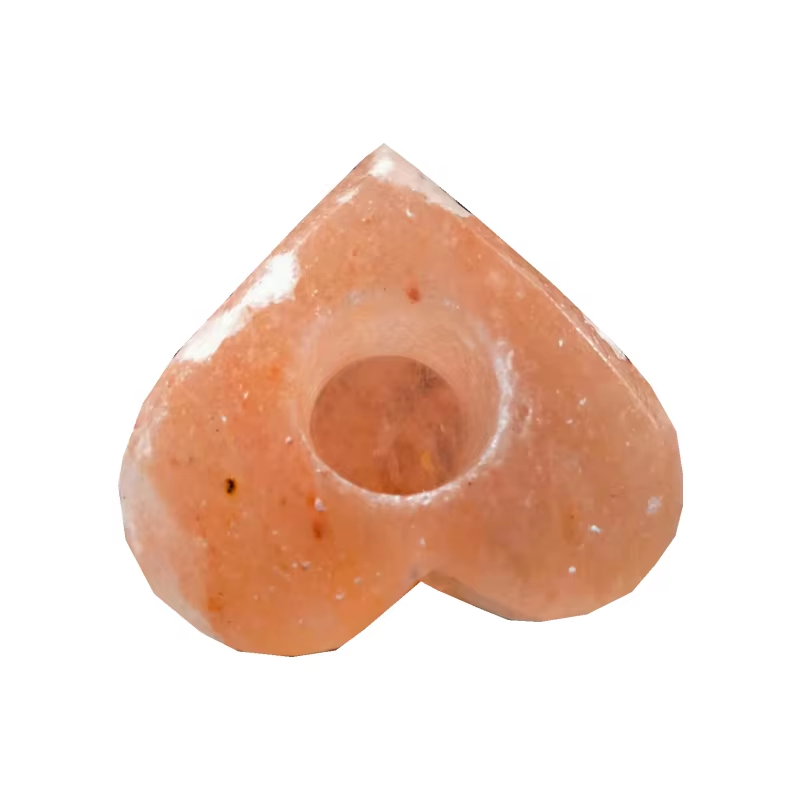
Light Diffusion and Visual Softness in Living Spaces
Himalayan salt balls act as natural light diffusers thanks to their mineral lattice structure, scattering photons across multiple crystalline facets. This yields illumination with uniquely low visual stress:
| Property | Standard Lamp | Himalayan Salt Ball | Benefit |
|---|---|---|---|
| Glare Index | 18–25 UGR | <10 UGR | Eliminates eye strain |
| Shadow Softness | Harsh transitions | Gradual gradient | Visual comfort |
| Surface Brightness | 200–500 cd/m² | 50–80 cd/m² | Reduced retinal fatigue |
Their matte, translucent surface absorbs high-frequency light while refracting softer wavelengths—producing a dappled, organic quality akin to sunlight filtering through leaves. Interior design research confirms spaces featuring such soft ambient lighting score 40% higher on occupant-reported relaxation metrics. In large rooms, the volumetric glow visually lowers ceiling height, fostering intimacy and making salt balls especially effective in living areas, bedrooms, or reading nooks where sensory comfort matters most.
Himalayan Salt Ball Air Purification: Science, Scope, and Realistic Expectations
Hygroscopy in Action: How Himalayan Salt Ball Draws Moisture and Particulates
Himalayan salt balls purify air primarily through hygroscopy—the natural ability of salt to attract water vapor from ambient air. When gently warmed (by a low-watt bulb or tea light), the surface forms a thin, transient layer of moisture that captures airborne particles like dust, pollen, and smoke. As heat causes evaporation, those pollutants remain adhered to the salt crystal. While this passive process has demonstrated modest reductions in particulate concentration in small, enclosed spaces, its effect is orders of magnitude lower than mechanical HEPA filtration. It functions best as a complementary wellness tool—not a replacement for clinical-grade air cleaning. Crucially, it operates silently and without electricity, aligning with low-impact, energy-conscious interior strategies.
Negative Ion Release: Measured Effects and Practical Limitations
Negative ion emission is often highlighted as a key benefit—but measured output from typical Himalayan salt balls remains minimal. Though salt can release negative ions under high heat or friction (e.g., ocean waves, waterfall mist), the gentle warmth of an indoor salt lamp generates negligible ion counts. Peer-reviewed studies confirm that ion production from heated salt lamps falls far below therapeutic thresholds—and well beneath outputs from commercial ionizers or natural high-ion environments. Therefore, while negative ions may contribute subtly to perceived freshness, they should not be cited as a primary mechanism for air purification. The real value lies in synergy: hygroscopic particle capture, chromatic psychology, and tactile-mineral aesthetics working together to support holistic environmental wellness.
Strategic Integration of Himalayan Salt Ball in Wellness-Oriented Interiors
Himalayan salt balls integrate seamlessly into home wellness design—not as isolated gadgets, but as intentional elements within multi-sensory ecosystems. In a dedicated meditation corner, place the lamp on a low shelf or side table where its glow softens architectural edges and reduces visual clutter. In spa-inspired bathrooms, position it near a freestanding tub or on a stone vanity: the warm light enhances relaxation while the hygroscopic surface helps mitigate humidity-borne particulates. Forward-thinking designers increasingly pair salt lamps with infrared heating panels, nature soundscapes, or biophilic materials to deepen restorative impact. For optimal performance, locate the ball away from drafts and clean it weekly with a dry microfiber cloth—this preserves crystalline integrity and ensures consistent diffusion and hygroscopic function. When treated as a foundational design element—not just decorative accent—it delivers layered benefits: visual calm, subtle air modulation, and grounded sensory presence.
Clarifying Misconceptions: Himalayan Salt Ball Claims vs. Scientific Evidence
Despite widespread enthusiasm, many Himalayan salt ball claims lack rigorous scientific validation. While the salt does contain trace minerals—including iron, magnesium, and potassium—its composition is approximately 98% sodium chloride. These trace elements are present in concentrations too low to confer measurable systemic health benefits when emitted passively into indoor air. Similarly, assertions about clinically significant negative ion generation or standalone air purification are unsupported by peer-reviewed clinical trials. No robust evidence links salt lamp use to improvements in insomnia, asthma, or allergy symptoms. That said, dismissing them entirely overlooks their empirically supported strengths: circadian-aligned lighting, glare-free diffusion, and psychologically grounding aesthetics. As with many wellness tools, their efficacy is contextual—not pharmacological. Their true value emerges not in isolation, but as part of a thoughtfully curated environment rooted in evidence-informed design principles.
FAQ
What is the primary purpose of Himalayan salt ball lighting?
The primary purpose is to create a soothing ambient atmosphere through its warm glow, promote relaxation, and provide visual comfort. It also offers modest air purification through hygroscopy and serves as an element of interior wellness design.
Do Himalayan salt balls release enough negative ions to improve air quality?
No, the negative ion release from Himalayan salt balls is minimal and far below therapeutic levels. The primary air purification mechanism is hygroscopic particle capture.
Can Himalayan salt balls replace air purifiers?
No, they are not a substitute for air purifiers. Their air-cleaning effects are marginal and work best as a complementary tool alongside HEPA filtration systems.
How should Himalayan salt balls be maintained?
They should be kept away from drafts and cleaned weekly with a dry microfiber cloth to preserve their functionality and appearance.
Where are Himalayan salt balls best placed for maximum effectiveness?
They are ideal for bedrooms, meditation corners, spa-inspired bathrooms, or reading nooks where sensory comfort and ambient lighting are valued.