EN
EN


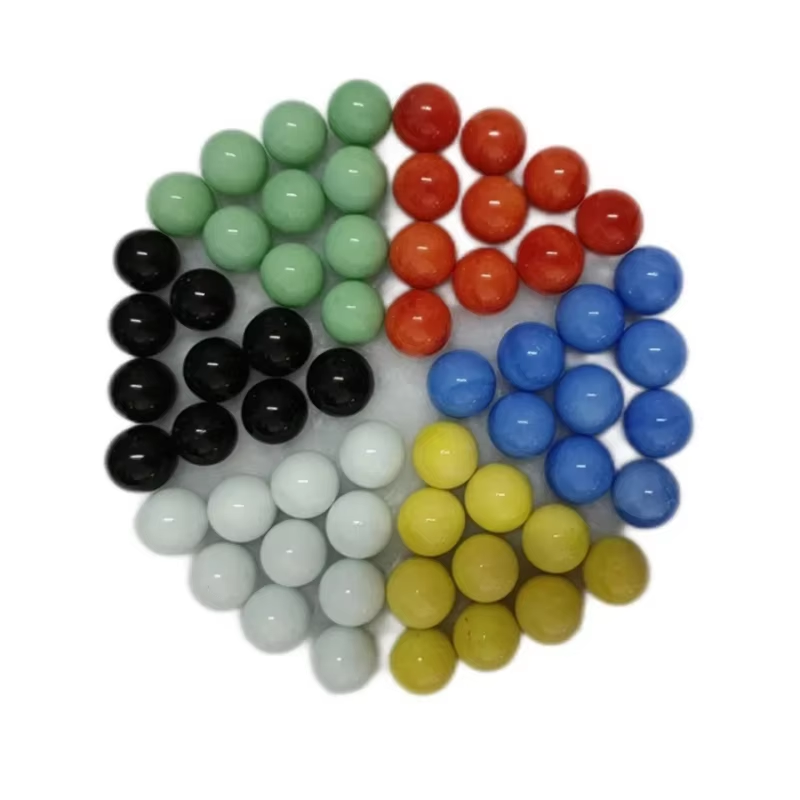
More people who enjoy outdoor activities have started using custom sized slingshot mud balls instead of regular ammunition because they're better for the environment. According to some market research from 2023 by Verified Market Reports, around 6 out of 10 slingshot shooters now look for biodegradable materials first. This shift comes mainly from growing worries about our planet's health plus new rules limiting plastic trash everywhere. The good news is that natural clay balls will break down completely in nature within just 4 to 6 weeks. Compare that to plastic pellets which hang around for hundreds of years, continuing to pollute rivers, lakes, and forests long after anyone even remembers shooting them.
Clay has a density range of around 1.3 to 1.5 grams per cubic centimeter, which gives it just the right balance between weight and size for accurate shooting. Plus, the material's natural porosity helps soak up moisture, reducing those annoying ricochets when hitting water or wet surfaces. A recent study from 2022 found that folks who hunt or shoot at targets saw about 23 percent better accuracy using specially shaped clay pellets instead of random rocks they might find lying around. And there's another benefit most people don't think about: clay doesn't wear down slingshot bands nearly as fast as metal alternatives do. Tests show bands last roughly 40% longer with clay projectiles compared to steel bearings, saving money in the long run for serious shooters.
These days, many schools and community centers are adding clay ammo to their STEM curriculum so kids can learn about real world physics stuff like how things fly through the air and what happens when they hit something. The smaller 10 to 15 mm clay pellets have become pretty standard for kid-friendly slingshot kits because they're much safer than traditional options but still let students play around with how projectiles work. Camp counselors tell us that when they switch to these biodegradable clay targets during outdoor education sessions, kids get about 35 percent more interested in talking about environmental issues. Makes sense really since seeing something actually break down after being shot helps drive home those green concepts in a way that just reading about them never could.
Manufacturers have reduced synthetic ammo production by 18% since 2020, transitioning to plant-based binders and natural clay composites. Over 68% of archery ranges now mandate eco-friendly slingshot ammo, with mud balls meeting ASTM F963-17 safety standards for outdoor recreation.
Customizable sizes (8—25mm) allow users to match mud ball weight (2—15g) to band strength and age groups. Toddler-friendly variants use softer clay mixtures (Shore 20D hardness), while competition-grade balls incorporate volcanic ash for enhanced density without environmental harm.
What makes custom slingshot mud balls so good for the environment? They start with natural clay taken right out of riverbeds and various mineral deposits. Most top quality makers go for sedimentary clay that has around 45 to 60 percent kaolinite in it. This range works really well because it strikes a balance between being easy to shape and holding together when fired. The big difference compared to regular plastic or rubber ammunition is that these clay balls don't need any synthetic stuff added during production. And here's something interesting: tests show they actually break down completely in garden soil after about three months without leaving any harmful residue behind.
Keeping the moisture level around 18 to 22 percent helps stop cracks from forming when shaping materials, and also makes sure they stay hard after drying. The industrial process involves baking these mud balls slowly in special kilns at about 200 degrees Celsius, which is roughly 392 Fahrenheit. This slow baking creates tiny holes throughout the material's structure that actually help absorb impacts without breaking apart completely. According to recent testing done in the field, clay treated this way keeps about 94% of its original weight when hit against targets. That's significantly better than the 67% retention rate seen with clay dried naturally in the sun, as noted in last year's Ballistic Materials Report.
| Drying Method | Cycle Time | Density (g/cm³) | Fracture Rate |
|---|---|---|---|
| Kiln | 8 hrs | 1.8 | 6% |
| Sun | 72 hrs | 1.4 | 33% |
CNC-machined aluminum molds create ±0.5 mm diameter tolerance, critical for predictable trajectories. Manufacturers implement statistical process control (SPC) to maintain <5% weight variance across production batches—meeting the consistency benchmark set by rubber ammo.
Clay mud balls outperform traditional materials in safety and eco-impact while trading minimal ballistic efficiency:
| Material | Biodegradable | Density (g/cm³) | Projectile Safety Index* |
|---|---|---|---|
| Natural Clay | Yes | 1.8 | 92/100 |
| Plastic | No | 1.1 | 74/100 |
| Rubber | No | 1.3 | 81/100 |
| Steel | No | 7.9 | 37/100 |
*Higher scores indicate safer impact profiles for recreational use (2024 Outdoor Sports Safety Council)
Modern slingshot users choose from four primary ammunition types:
| Ammo Type | Speed (FPS)* | Impact Force | Environmental Profile | Best Use Case |
|---|---|---|---|---|
| Steel | 320—380 | High | Non-biodegradable | Target penetration |
| Clay | 240—290 | Moderate | Biodegradable | Recreational shooting |
| Rubber | 180—220 | Low | Slow-degrading | Youth/safety training |
| Plastic | 260—310 | Medium | Non-biodegradable | Budget backyard plinking |
FPS = Feet per second based on average band tension (Source: 2023 Slingshot Ballistics Report)
Steel delivers maximum kinetic energy but demands heavy-duty equipment, while custom size slingshot mud balls made from natural clay offer a balanced alternative for casual and educational use. Rubber dominates safety-focused scenarios, and plastic serves budget-conscious users.
In professional shooting configurations, steel ammunition can hit speeds exceeding 350 feet per second, leaving behind impact craters nearly 2.3 times deeper than those from clay rounds during soil testing experiments. Clay targets tell a different story though. Their compressible nature helps maintain around 80% flight stability across distances up to 25 yards, which beats plastic's performance at just 65% consistency according to recent findings from Outdoor Gear Lab in their 2024 report. Rubber based options take a different approach altogether. They trade off velocity for much gentler recoil characteristics, something many shooters find incredibly helpful when first developing proper marksmanship techniques without getting overwhelmed by powerful kickback.
Kids younger than twelve tend to have about forty percent better control when playing with those smaller eight to ten gram clay balls instead of the regular twelve gram steel ones. The Recreational Safety Institute did some testing on this recently and found these results pretty consistently across different groups. For teenagers, it makes sense to go with fourteen to sixteen gram mud balls along with bands that aren't too tight or loose. This helps protect their joints from getting sore after extended playtime. Adults will notice something else too - clay actually squishes when it hits things, so there are way fewer dangerous bounces back at them. Some tests showed this cuts down on dangerous ricochets by around two thirds compared to what happens with steel balls.
According to the Environmental Protection Agency report from 2024, most slingshot debris in North American wild areas is made up of plastic and steel ammo, accounting for around 92%. Steel balls can take more than half a century to break down through oxidation processes. Plastic bits are even worse since they basically stick around forever. On the flip side, those homemade clay mud balls decompose completely within 6 to 18 months based on what kind of dirt they end up in. This makes them much better for outdoor ethics and aligns nicely with the Leave No Trace guidelines that many hikers and nature lovers follow these days.
The best slingshot performance actually works according to Hooke's law where the energy stored grows as bands get tighter and stretched further out. Take a regular latex band pulled back to about double its normal length, it holds around 0.8 Joules worth of energy according to some tests from Outdoor Recreation Institute last year. That kind of power can launch a small 12 gram mud ball across roughly 25 meters distance. Using ammo that's too big for the bands tends to wear them out faster than they should. On the flip side, smaller projectiles just don't work well either since they spread out the energy too much instead of focusing it properly.
| Band Type | Recommended Mud Ball Weight | Max Effective Range |
|---|---|---|
| Single Latex Tube | 8—10g | 18m |
| Double Flat Bands | 12—15g | 30m |
| Surgical Tubing | 15—20g | 35m |
When the equipment doesn't match properly, accuracy drops somewhere between 40 and 60 percent according to field tests. For younger athletes working with balls under 8 grams, it's important to use bands that require no more than 300 grams of pulling force to avoid potential strain issues on developing muscles. Older shooters aiming at distances past 25 meters generally benefit from heavier tension bands in the 700 to 900 gram range paired with ammunition weighing around 18 to 20 grams. Temperature matters too since cold weather actually makes latex materials less elastic. Most experienced users find they need to switch to ammunition that's roughly 10 percent lighter when shooting in chilly conditions just to keep those stretch ratios within safe limits.
When tested under controlled conditions, those little 8 gram balls shot out of 0.75mm bands hit speeds around 23 meters per second, but they only managed to hit targets about 42% of the time when fired from 15 meters away. Things look better with the heavier 18 gram versions though these slowed down to 18 meters per second they actually landed on target 68% of the shots at 20 meters distance. That shows why getting the right weight match matters so much for good ballistics performance. According to folks at the National Slingshot Association, shooters should aim to stay no more than half a gram above or below what's specified for their particular band setup if they want predictable trajectories every time they fire.
When it comes to slingshot mud balls, those perfectly round ones actually fly straighter about 15% of the time compared to weirdly shaped alternatives because they cut through air better according to some research from Outdoor Ballistics Journal back in 2023. Some folks have started making ovals with angled sides that let wind pass through them more easily when aiming at distant targets. Flattened disk shapes work great for games played on the ground since they roll predictably across surfaces. Most companies now rely on computer models to tweak how much air resistance their products face while still keeping them tough enough to withstand repeated launches.
Precision drilling ensures uniform weight distribution (±0.2g tolerance), reducing mid-flight wobble. Surface polishing and proprietary drying methods create moisture-resistant exteriors that maintain aerodynamic profiles even after repeated impacts. Advanced shooters pair these refined mud balls with grooved slingshot pouches to enhance grip and release symmetry.
Junior-sized 8—12mm clay balls weigh 30% less than standard ammunition, reducing injury risks while enabling effective ranges of 10—15m. A porous clay blend softens impact forces by 40% compared to denser variants, making them ideal for backyard target practice or introductory marksmanship workshops.
High-compression molding creates 18—22mm mud balls with 1.8g/cm³ density, matching the ballistic performance of lightweight steel ammo while remaining fully biodegradable. Adult-focused designs incorporate reinforced clay cores that withstand 90N band forces, enabling competition-grade accuracy at 25—30m distances—offering a responsible alternative to plastic or metal projectiles.
 Hot News
2025-12-21
2025-12-15
2025-12-05
2025-12-02
2025-12-01
2025-11-19