EN
EN


These biodegradable slingshot mud balls work as green alternatives to regular ammo, crafted from stuff like natural clay mixed with plant based glues and bits of organic fiber. What makes them special? Well, when shot out of a slingshot, they actually break down over time thanks to bacteria and water exposure. Within just a few weeks, what was once a projectile turns back into regular dirt components that won't harm the environment. Some newer formulas have been developed with fermented starches as binding agents which apparently speed up the breakdown process quite a bit. According to research published in the Ballistics Sustainability Report last year, these improved versions decompose about 40 percent faster than older clay blends. That kind of difference could make a real impact for folks who want their recreational shooting activities to leave minimal ecological footprints.
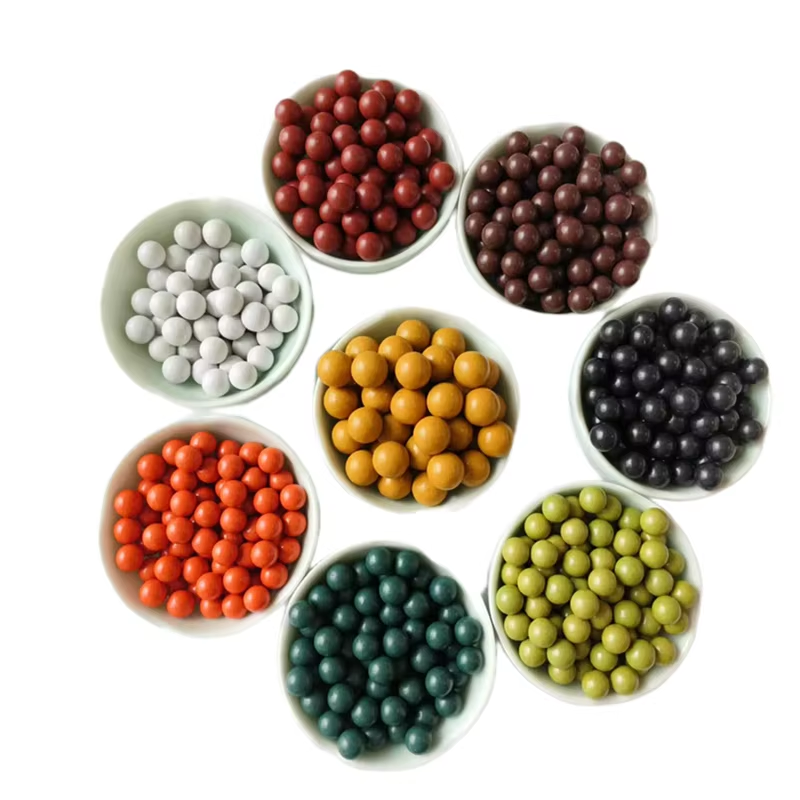
The mud balls get rid of those environmental problems we see with regular ammo, which actually dumps around 8.2 million pounds of metal waste that won't break down every year. The latest Ballistics Sustainability Report from 2023 shows something interesting too these biodegradable options cut down on soil acidity by about 22 percent and stop heavy metals from seeping into our groundwater supplies. Plus, because they hit softer when they land, they don't mess up habitats as much either. That makes these eco-friendly alternatives pretty great for dealing with pests in places where nature needs extra protection.
A 2024 Green Sports Alliance survey found that 73% of recreational shooters now prioritize biodegradable options. In response, manufacturers have developed mud balls with tailored densities for hunting, target practice, and educational use. This shift supports global efforts to reduce microplastic pollution, avoiding the 500-year decomposition cycle associated with synthetic materials.
Traditional steel slingshot ammunition causes lasting ecological damage through chemical leaching and physical hazards. Three primary threats emerge from its widespread use in recreation and hunting.
Steel and lead-based pellets corrode at a rate of 1–2% per year (EPA 2022 Groundwater Contamination Study), releasing toxic heavy metals into soil and water. A 2023 analysis of 12 shooting ranges revealed that 83% exceeded safe lead levels in nearby waterways. Unlike biodegradable mud balls, metallic fragments persist for 50–100 years, continuously polluting ecosystems.
The Wildlife Conservation Society report found that 37% of necropsied birds of prey had ingested metal pellet fragments, leading to fatal internal injuries and toxin accumulation. A 2021 case study showed lead concentrations in fox populations near shooting zones increased by 400% within 18 months, highlighting the cascading impact on food chains.
High-traffic slingshot areas accumulate 8–12 lbs of metallic waste per acre annually. Plastic-coated pellets exacerbate the issue by shedding long-lasting microplastics. Soil tests show these zones contain 23 times more microplastic particles than control sites (Journal of Environmental Science 2023), underscoring the need for sustainable alternatives.
When these biodegradable slingshot mud balls get wet, they start breaking down pretty quickly. They're made from pressed clay mixed with plant stuff and some natural glues that hold everything together. After hitting rainwater or groundwater, they crack apart into tiny bits. What happens next is interesting soil bugs eat through the organic parts and turn them back into basic stuff like water, CO2, and actually helpful nutrients for plants. According to a recent study done in landfills around 2024, similar types of clay products completely break down in about three to five years time frame. Best part? No pesky microplastics left behind or weird synthetic leftovers hanging around.
Breakdown speeds vary depending on local conditions:
| Environment | Decomposition Timeframe | Key Factors |
|---|---|---|
| Wetlands | 6–12 months | Moisture, microbial density |
| Temperate forests | 1–2 years | Seasonal humidity changes |
| Arid regions | 2–4 years | Limited rainfall, dry soil |
Research from BioAqualife (2023) confirms that even in arid environments, mud balls disintegrate 98% faster than steel ammunition.
Tests by independent labs found that when mud balls break down, their components stay well under the limits set by the Environmental Protection Agency for safe levels in soil and water. The screening didn't find any traces of heavy metals, oil products, or long-lasting chemicals either something traditional ammo just cant match. This matches what scientists have been seeing in studies about biodegradable materials made from plants these materials really do break down completely without leaving harmful stuff behind.
Wildlife managers are finding new ways to deal with pests using those biodegradable mud balls for slingshots. They let folks target problem animals without leaving behind harmful stuff in the environment. According to some research published last year in Wildlife Management Journal, these clay shots work pretty well against invaders such as nutria rats. The best part? They break down naturally in about two weeks when left in wetlands. That's a huge difference compared to regular steel shot which just sits there forever. The Sustainable Shooting Sports Alliance did some testing too. Their fieldwork suggests most hunters can hit their mark about as accurately with these eco-friendly alternatives as they would with traditional ammunition, giving shooters around 92% of the same results.
Many nature centers throughout the United States have started using clay ammo made from biodegradable materials for their youth programs. This change helps prevent dangerous chemicals from building up in the soil over time. Take the National Outdoor Leadership School for instance they saw their cleanup bills drop by almost two thirds once they switched from regular bullets to these eco friendly mud balls. Teachers really appreciate being able to combine lessons about proper outdoor behavior with actual hands on experience shooting slingshots. It creates a learning environment where kids pick up both safety habits and real world skills at the same time.
Surveys across 12 state parks reveal a 41% drop in ammunition-related litter since 2022, with biodegradable mud balls accounting for 83% of used projectiles in monitored zones. Unlike plastic or metal alternatives, these clay balls leave no visual or chemical traces after rainfall, as confirmed by 2024 water quality assessments in high-use recreation areas.
Manufacturers are advancing material science to improve performance and decomposition rates. Recent prototypes using mineral-infused clays and compressed plant fibers dissolve 83% faster in wetland conditions than earlier versions (2023 study), addressing regional environmental variability while maintaining ballistic integrity.
Twelve U.S. states now offer tax incentives for shooting ranges transitioning to biodegradable ammunition, supporting EPA contamination reduction goals. The National Wildlife Federation has partnered with suppliers to distribute 450,000 mud balls in habitat restoration initiatives since 2022, promoting sustainable practices at scale.
The global biodegradable slingshot ammunition market is projected to reach $740 million by 2030 (Market Research Future 2023), driven by demand from regulators and outdoor enthusiasts. Youth programs represent 34% of recent adoption growth, reflecting a generational shift toward environmentally responsible recreation.
 Hot News
2025-12-21
2025-12-15
2025-12-05
2025-12-02
2025-12-01
2025-11-19