EN
EN


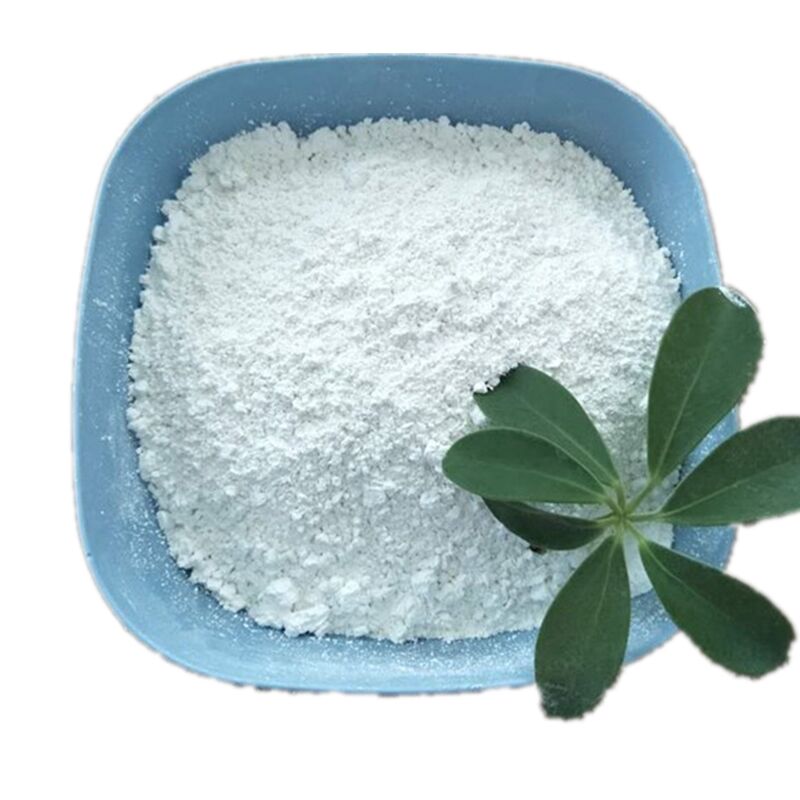
Calcium carbonate at industrial levels serves as one of the main fillers used in making plastic composites. Manufacturers can actually replace between twenty to forty percent of the original polymer resin without affecting how strong the final product remains. This kind of material swap really helps move toward circular economy principles since it cuts down on our dependency for those oil derived plastics we've been using for so long. What makes this mineral particularly useful is its ability to conduct heat better than many alternatives. When injected into molds during manufacturing processes, this property speeds up the cooling phase significantly. Some factories have reported cutting their production time by around fifteen percent thanks to this effect according to findings from last year's report on optimizing plastic fillers.
When added at concentrations between 18% and 40%, calcium carbonate boosts the tensile strength of polypropylene sheets by approximately 12 to 25 percent. The heat deflection temperature also goes up around 20 degrees Celsius. According to research published in 2024 by Heritage Plastics, when loaded at the maximum 40% level, impact resistance jumps about 30% over regular unfilled polymer materials. What's interesting is that this improvement comes with cost savings too - material expenses drop roughly eighteen cents per pound. For manufacturers looking at real world applications, these properties work particularly well for parts used in cars and heavy duty packaging where things get shaken up quite a bit during normal operation.
Switching out expensive plastics for calcium carbonate can slash material expenses anywhere from 18 to maybe even 35 percent when making things through extrusion or blow molding processes. The round shape of these particles actually helps materials flow better during melting, which means manufacturers can produce PVC pipes with thinner walls and create HDPE films that are just as strong but require less material. Companies have been jumping on this bandwagon for quite some time now, especially after 2020 when many started looking seriously at ways to cut costs without sacrificing quality in their production lines.
When stearic acid coats calcium carbonate particles, it actually lowers the tension at the boundary where minerals meet polymers. This coating trick boosts how well they mix together, hitting around 95% efficiency compared to just 78% for regular uncoated versions. Some companies also throw in coupling agents like titanates to get even better results. These additives help manufacturers pack about half their products with fillers while keeping things flexible enough not to crack under stress. Looking at current market trends, roughly 42% of all industrial grade calcium carbonate going into technical plastics these days comes pre-engineered with these special coatings. The numbers tell us something important about what industries value most when balancing performance against material costs.
Industrial grade calcium carbonate acts as a multifunctional filler in rubber manufacturing, increasing compound density while preserving elasticity. Surface-treated variants particularly stearic acid-coated grades achieve up to 35% better dispersion in natural and synthetic rubber matrices than untreated forms. This improved integration lowers viscosity during extrusion, supporting processing speed increases of 15–20% according to industry benchmarks.
Incorporated at 20–40 phr (parts per hundred rubber), calcium carbonate boosts tensile strength by 18–22% and reduces compression set by 12–15% in automotive seals and bushings. Its alkaline nature helps neutralize acidic byproducts during curing, accelerating vulcanization and reducing cure times by 8–10 minutes in tire tread production. Research published in Frontiers in Materials (2019) confirms that calcium carbonate-filled compounds generate 30% less heat buildup than carbon-black alternatives, enhancing service life.
| Filler Type | Cost Impact | Environmental Effect | Reinforcement Capability |
|---|---|---|---|
| Calcium Carbonate | +10–20% | Low | Moderate |
| Carbon Black | +25–40% | High | High |
| Precipitated Silica | +35–50% | Moderate | High |
Rubber formulators achieve 20–30% material cost savings using calcium carbonate instead of silica or carbon black, with minimal performance trade-offs in non-critical applications. Industry data shows that 62% of weather-stripping manufacturers now use calcium carbonate blends to meet sustainability targets while maintaining tear strength above 4 MPa.
Industrial grade calcium carbonate plays a vital role in modern construction materials, delivering technical performance and environmental benefits in cement, mortars, and precast concrete.
When added at 10–25% loading levels, calcium carbonate improves particle packing density in cementitious mixes, reducing water demand by up to 15% without sacrificing slump flow. It also accelerates early hydration reactions, cutting demolding times for precast elements by 20–30%, as demonstrated in concrete workability studies.
Surface-modified calcium carbonate particles act as micro-reinforcements, bridging microcracks in hardened concrete. This mechanism improves flexural strength by 12–18% and reduces shrinkage cracking by 40% compared to unfilled systems. With a natural alkalinity (pH 9–10), the filler helps protect embedded steel reinforcement from corrosion in humid environments.
Substituting 15% of Portland cement with calcium carbonate lowers CO₂ emissions by approximately 120 kg per cubic meter of concrete. Due to its lower specific gravity (2.7 vs. 3.1 for cement), it enables 8–12% weight reduction in prefabricated panels without compromising load-bearing capacity supporting lightweight, LEED-certified building designs.
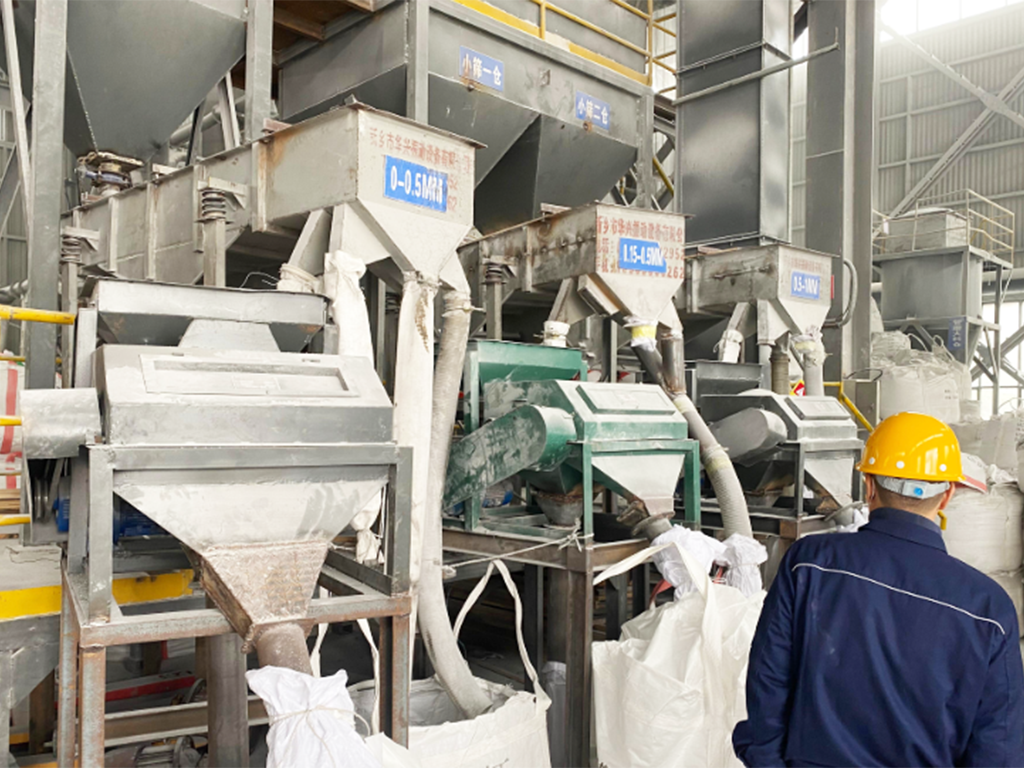
Calcium carbonate used in industrial applications comes mainly in two varieties: ground calcium carbonate (GCC) and precipitated calcium carbonate (PCC). For GCC production, manufacturers take natural materials like limestone, marble, or chalk and grind them down mechanically. The result? Irregular particles that typically measure between 1 to 20 microns across. On the other hand, PCC gets made through a chemical process called precipitation. This method creates much smaller particles, often around 0.02 to 2 microns in size, and gives them pretty regular shapes like rhombohedrons or scalenohedrons. These different characteristics make each type suitable for various industrial needs depending on what properties are required for a particular application.
| Property | GCC | PCC |
|---|---|---|
| Production Method | Mechanical grinding of limestone | Chemical synthesis via carbonation |
| Particle Shape | Irregular | Uniform (e.g., rhombohedral) |
| Bulk Density | 0.8–1.3 g/cm³ | 0.5–0.7 g/cm³ |
| Cost | 30% lower | Higher due to complex processing |
According to a 2023 mineral processing analysis, GCC’s low moisture content (0.2–0.3%) makes it suitable for moisture-sensitive applications, while PCC’s high purity and 97% whiteness are ideal for premium-grade formulations.
When it comes to plastics, GCC makes things stiffer without breaking the bank in products like plastic films and pipes. Meanwhile, PCC steps in where hiding imperfections matters most, giving automotive parts that nice opaque look and smoother finish everyone wants. Looking at rubber applications, the bigger particles in GCC actually help tires hold up better under stress. The smaller PCC particles work wonders too, making sealants stretch just right without tearing apart. Construction companies tend to go with GCC for filling up concrete mixes because it's simply cheaper than alternatives. But when building those special high strength mortars, contractors reach for PCC instead since it helps prevent cracks from forming. According to recent industry data from last year, about two thirds of all fillers used in PVC manufacturing are GCC based. Makes sense really, since nobody wants to pay extra for something that works just as well at half the price. Still, PCC remains king in those niche polymer mixtures where regular fillers just won't cut it.
The production process for GCC is much simpler compared to other materials, which means manufacturers can produce it on a large scale at around $120 to $150 per ton. This makes GCC a good choice for industries that need massive quantities, especially construction companies building roads or commercial buildings. On the flip side, PCC comes with a higher price tag ranging from $300 to $400 per ton, so it tends to show up mainly in specialized applications where getting those particles just right matters more than the bottom line. Most factories go with GCC when budget constraints are tight, but they switch to PCC whenever the product needs exceptional properties like better dispersion throughout the material, improved whiteness, or consistent quality across batches. We see this happening frequently in products such as medical grade plastics used in surgical instruments or premium paint formulations for luxury architecture projects.
Industrial grade calcium carbonate often requires surface treatment to overcome poor interfacial adhesion and aggregation in polymer and rubber matrices. Without modification, fillers can weaken composites and disrupt processing. Proper surface engineering transforms calcium carbonate into an active performance enhancer.
Surface treatment significantly improves composite performance. Studies show modified particles increase impact resistance by 22–30% in polypropylene versus untreated counterparts. Effective methods include:
These techniques reduce filler aggregation by 60–75% during extrusion while maintaining consistent melt flow.
When applied to materials, stearic acid forms a water-repelling surface that works really well with non-polar polymers such as polyethylene. This helps cut down those sudden increases in viscosity during injection molding processes by around 15 to maybe even 20 percent. Moving on to silane coupling agents now these actually create chemical bonds between calcium carbonate particles and rubber bases. The result? Vulcanized products show much better tensile strength, typically about 25% to 35% stronger than untreated ones. Manufacturers have been experimenting quite a bit lately with combining traditional treatment methods alongside ultrasonic dispersion techniques. What they've found is pretty impressive too particle distribution across advanced thermoplastic compounds reaches nearly perfect levels at approximately 99.7% uniformity. This kind of precision opens up all sorts of possibilities for creating high performance materials in various industrial applications.
 Hot News
2025-12-21
2025-12-15
2025-12-05
2025-12-02
2025-12-01
2025-11-19