EN
EN


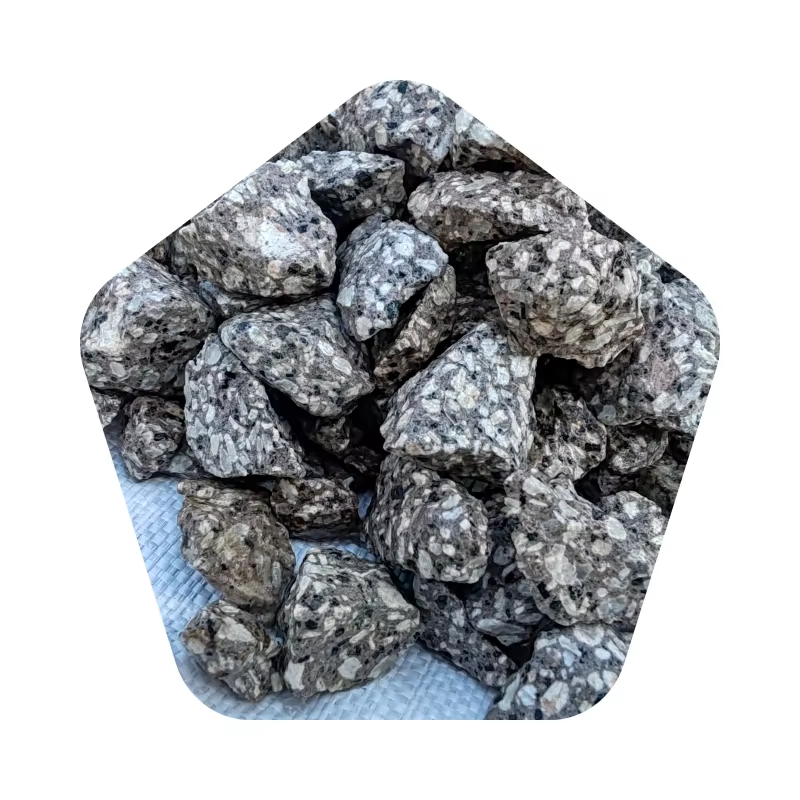
Medical stone, sometimes called maifan stone, comes from volcanoes and contains lots of silica, calcium, magnesium plus smaller amounts of potassium and iron. These rocks take thousands of years to form underground as earth shifts and changes. For ages now, people throughout Asia have put these stones in their water filters because they work pretty well at cleaning water. The special chemicals in medical stone don't harm living things either, which makes them safe to use in homes and communities where clean drinking water matters most.
Maifan stone works so well for treating water because of those tiny little holes throughout its structure. We're talking about a surface area that goes beyond 200 square meters per gram when measured properly. What happens is these microscopic openings grab onto stuff floating in the water, physically holding contaminants back. At the same time, there are ions on the surface of the stone that pull in pollutants like magnets attracting metal bits. This dual action means both trapping things mechanically and reacting chemically with what's in the water. Lab results show this combo can cut down on cloudiness and remove organic stuff from water samples at around 92 percent efficiency. Pretty impressive for something that looks just like regular rock!
Peer-reviewed studies demonstrate maifan stone’s dual purification mechanisms:
A 2021 adsorption efficiency study in Scientific Reports confirmed that maifan stone achieves 24% higher heavy metal removal compared to synthetic resins in neutral pH conditions, attributing this to its balanced pore size (2–50 nm) and natural mineral diversity.
The tiny pores in medical stone work similarly to a molecular sieve, capturing heavy metals by sticking them to its surface. Studies published in the journal Nature indicate that minerals such as maifan stone can remove around 95% of lead and mercury from water when conditions are neutral. What makes this material special compared to synthetic alternatives is that it doesn't need harsh chemicals to refresh its ability to trap contaminants. Instead, maifan stone naturally redistributes ions within its structure, maintaining effectiveness over time without complicated maintenance processes. This property has made it increasingly popular among water treatment facilities looking for sustainable solutions.
Maifan stone’s cation exchange capacity (CEC) replaces harmful ions with beneficial trace minerals such as calcium and magnesium. This process reduces water hardness while introducing electrolyte-supporting elements like potassium and sodium. In contrast, conventional ion exchange systems often deplete essential minerals, necessitating post-treatment remineralization.
Medical stone works against acidic stuff in water by letting out those alkaline minerals, which brings the pH level up to somewhere around 8.2 to 8.9. Cities testing this method have seen their water pH go up by about 0.8 to 1.4 points when compared with regular chemical treatments. The bigger alkalinity makes a real difference for pipes too. Corrosion costs American water systems roughly $2.3 billion every year, as noted by folks at AWWA last year. So keeping those pipes from rusting out saves money and keeps the whole system running smoother over time.
| Property | Maifan Stone | Synthetic Resins |
|---|---|---|
| Heavy metal removal | 89–94% efficiency | 91–96% efficiency |
| Mineral retention | Adds 12+ minerals | Requires remineralization |
| Environmental impact | Biodegradable | Chemical waste generated |
Data from Global Water Purification Trends confirms natural mineral solutions now account for 38% of new industrial filtration installations, driven by sustainability mandates and performance reliability.
Medical stone is now pretty much standard in home water filters because it works well with most existing filter designs. Many modern filters combine maifan stone with activated carbon layers to make those multi stage systems we see so much these days. The tiny pores in this stone, about 5 to 10 nanometers across, grab onto all sorts of stuff floating in the water. Some under sink models that use medical stone cartridges claim they can cut down on lead and cadmium levels by around 94% after just one pass through the filter. A study from 2023 by the International Water Quality Association backs this up, though results might vary depending on water conditions. Pitcher type filters filled with granules of maifan stone have gained popularity lately too. These not only filter out impurities but also add back some minerals like magnesium at about 8 to 12 milligrams per liter and calcium around 10 to 15 mg/L. This helps compensate for what gets stripped away during regular city water treatment processes.
| Metric | Medical Stone | Activated Carbon | Ceramic Filters |
|---|---|---|---|
| Heavy Metal Removal | 92% (lead, mercury) | 75–80% (chlorine, VOCs) | 65–70% (bacteria, sediments) |
| Mineral Retention | Adds calcium, magnesium | Removes all minerals | Neutral mineral balance |
| Lifespan | 6–8 months (4,500L capacity) | 3–4 months (2,000L capacity) | 12+ months (mechanical scrub) |
According to Materials in Water Technology (2023), medical stone outperforms traditional media in heavy metal adsorption while uniquely restoring beneficial electrolytes. While ceramic filters excel in microbial removal, they require frequent cleaning; activated carbon is less effective against dissolved metals like arsenic.
What sets medical stone apart from those synthetic resins is its completely non-toxic makeup, so there's no worry about chemicals leaching into the water. People actually taste the difference too. A recent study found that when folks couldn't see which water they were drinking, 83% went for the one treated with maifan stones because it just felt smoother on their tongues compared to regular reverse osmosis water (Journal of Hydration Studies, 2022). The way these stones naturally add minerals back into the water fixes that flat, boring taste that comes from purified water. Get around 15 to 20% of your daily calcium just by drinking a liter. For families wanting something better than those throwaway filters that end up in landfills, this combination of cleaning water while also boosting nutrition seems pretty hard to beat.
The unique microporous nature of medical stone combined with its strong adsorption properties makes it a promising option for cleaning industrial water. Recent tests from 2022 showed that when applied to electroplating waste, maifan stone managed to cut down dangerous levels of lead and cadmium by around 85 to 92 percent. That's actually quite impressive compared to conventional methods like lime precipitation which only manages about 12 to 15 percentage points less effectiveness, plus creates significantly more sludge as a byproduct. What really stands out though is how durable this material proves to be. With a compression resistance rating between 4 and 5 MPa, these stones hold up well even under heavy water flow conditions. This durability factor addresses one major limitation faced by granular activated carbon solutions that tend to break down over time in large scale operations.
A water treatment facility somewhere in Southeast Asia swapped out about a third of their activated carbon filters for these special maifan stone granules. The results were pretty good actually - they managed to remove around 94% of chlorine byproducts compared to 96% before, but saved between 15 and maybe even 20 percent on operating expenses. Something interesting happened too: those filters lasted much longer now, going from about six months to roughly eight and a half months because there was less buildup inside them. According to their annual report from last year, the water coming out after treatment had a stable pH level between 7.2 and 7.8, plus it naturally contained more magnesium at around 3.2 mg per liter and calcium at approximately 18.7 mg per liter. This meant they no longer needed to add minerals artificially to the water supply.
The global demand for medical stone in water purification is projected to grow at 8.4% CAGR through 2030 (Global Water Institute, 2023), driven by stricter heavy metal regulations such as the EPA’s updated Lead and Copper Rule. Industries favor maifan stone over synthetic resins for two reasons:
This shift aligns with findings from a 2023 Water Technology Survey showing that 78% of industrial operators prioritize sustainable materials in their water management planning.
Medical stone contains lots of minerals that slowly release calcium, magnesium, and zinc into clean water over time. Most people don't realize that these essential nutrients get removed during regular water filtering processes. When we drink this enriched water, our bodies actually absorb these minerals better than from food sometimes. What makes medical stone special is how it works similarly to those clear mountain streams everyone talks about. No chemicals are involved here, just nature doing what it does best. People who have tried using medical stones report feeling more energized and healthier overall after several weeks of regular use.
Reverse osmosis (RO) and distillation remove 92–99% of beneficial minerals. Maifan stone filtration restores calcium and magnesium levels comparable to natural spring water. This approach aligns with advanced treatment protocols used in large-scale bottling plants, where post-RO remineralization is now standard to avoid producing “dead water.”
Water filtered through medical stone typically has a pH of 7.5–8.5, helping maintain bodily acid-base balance. Magnesium supports cardiovascular function, while zinc contributes to immune health. Though clinical evidence is still emerging, early research suggests alkaline, mineral-enriched water improves hydration efficiency by 15–20% compared to demineralized alternatives.
Medical stone, also known as maifan stone, is a natural mineral-rich rock derived from volcanic sources, containing silica, calcium, magnesium, and other beneficial trace minerals. It forms underground over thousands of years due to geological processes.
Maifan stone purifies water through its microporous structure, which adsorbs contaminants and utilizes ion exchange to remove harmful ions, thereby enhancing water quality by adding beneficial minerals.
Using medical stone in home water purification provides non-toxic filtration, mineral enrichment, improved taste, and long-lasting performance without producing chemical waste.
Yes, maifan stone is effective at an industrial scale for pre-treatment and wastewater processing due to its strong adsorption properties and durability under heavy flow conditions.
Maifan stone provides natural mineral retention, is biodegradable, and offers a sustainable alternative without the need for chemical regeneration, unlike synthetic resins that often generate chemical waste.
 Hot News
2025-12-21
2025-12-15
2025-12-05
2025-12-02
2025-12-01
2025-11-19