EN
EN


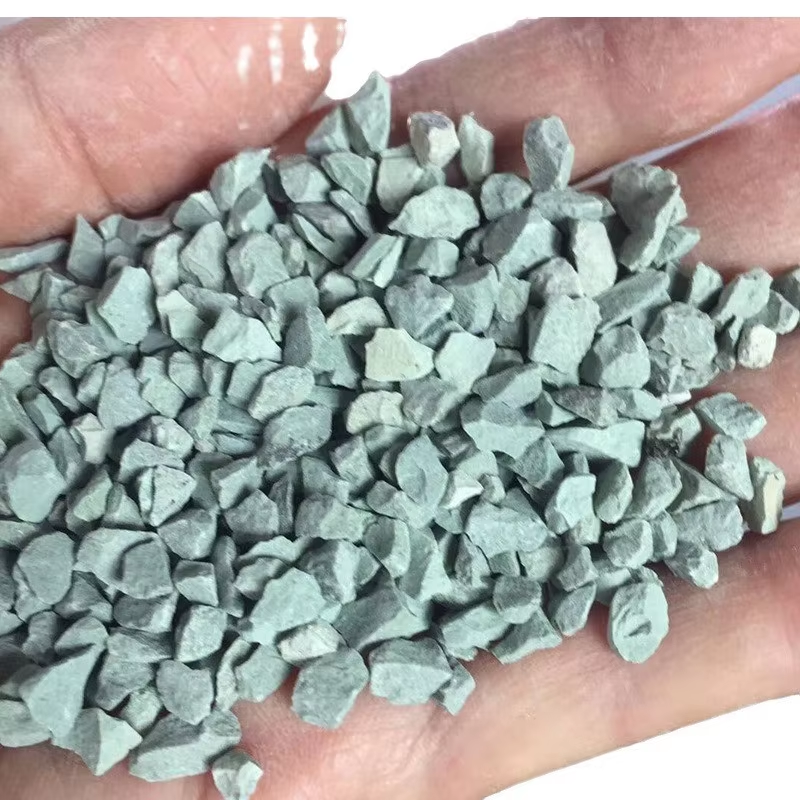
Zeolite powder really speeds things up in both petroleum refining processes and when making large batches of chemicals. It works kind of like a molecular sieve, letting certain reactants pass through while keeping others out, and also helps stabilize those tricky transition states during reactions. When we look at fluid catalytic cracking specifically, FAU type zeolites tend to boost diesel production quite a bit compared to regular old amorphous catalysts, somewhere around 18 to 22 percent better according to industry tests. What makes these materials so valuable is their ability to be reused multiple times. Even after going through about fifty cycles at high temperatures around 650 degrees Celsius, they still retain roughly ninety percent of their original effectiveness. This durability means plants can keep running smoothly without constantly replacing catalysts, which saves money and downtime in the long run.
Zeolite powders are widely used to capture volatile organic compounds (VOCs) and nitrogen oxides (NOx) from industrial exhaust. Copper-exchanged CHA-type zeolites achieve up to 95% NOx conversion at 200-400°C—a range that aligns with turbine exhaust temperatures—enabling cost-effective retrofits without major infrastructure changes (Nature, 2023).
In polymer production, zeolite catalysts deliver 98.5% pure ethylene during steam cracking by directing reaction pathways through controlled acid sites, reducing unwanted propylene byproducts by 30-40%. For polypropylene manufacturing, beta-zeolite additives cut energy consumption by 25 kWh/ton while meeting ISO standards for tensile strength.
Zeolite powders take out nearly all lead ions even when water flows through at over 20 bed volumes per hour, which is about double what resin systems can handle. These materials work because their special framework swaps out sodium for calcium and magnesium ions, so they perform really well in places where there's lots of salt in the water like along coastlines or near desalination facilities. Field tests show that these zeolites last roughly half again as long between maintenance compared to regular water softeners before needing to be cleaned or replaced.
Industrial operators selecting zeolite powder must evaluate structural frameworks and material origins. Crystalline aluminosilicate structures create pore networks of 3-10 Å, where channel geometry determines molecular selectivity and catalytic performance.
Five synthetic frameworks dominate industrial applications:
Adjusting SiO₂/Al₂O₃ ratios from 2:1 to 200:1 allows fine-tuning of acidity and thermal stability.
Clinoptilolite and other natural zeolites can be pretty cost effective when it comes to ion exchange in wastewater treatment applications. However, these materials often have problems with their pore structures being too irregular. The synthetic alternatives on the market today actually create much more consistent three dimensional channel networks along with increased acid site density, which makes them better suited for those situations where catalytic reactions need to happen precisely. Looking at market usage numbers gives us an interesting picture too. About 8 out of 10 agricultural operations still rely on naturally occurring zeolites despite their limitations. Meanwhile, refineries are almost entirely using synthetics now, with roughly 92 percent of their processing needs met by these manufactured materials because they simply hold up better under extreme heat conditions over 900 degrees Celsius.
The high silica content in MFI frameworks makes them resistant to coking during petrochemical cracking processes, while their low silica counterparts like FAU zeolites offer maximum proton activity needed for efficient biodiesel production. Clinoptilolite has those special 4.1 angstrom pores that grab ammonia ions specifically from water in aquaculture settings, and the unique cage-like structure of CHA zeolites works great at trapping nitrous oxide emissions in industrial exhaust systems. When temperatures go above 600 degrees Celsius or when extremely fine molecular separation is required down at sub-angstrom levels, synthetic versions tend to perform better than naturally occurring materials in most practical applications.
Optimal performance hinges on three key factors: particle characteristics, ion-exchange capacity, and real-world catalytic efficiency. These directly impact process yield, purity, and operational costs across industrial workflows.
The sweet spot for particle sizes lies somewhere between 0.5 and 10 microns where they get that perfect balance of surface area relative to volume. When we narrow down the size distribution to within about plus or minus 15%, it makes all the difference for how evenly molecules can access those tiny pores inside materials. This actually boosts reaction speeds by roughly 20 to 30 percent compared to when particles vary widely in size. Take nitrogen separation processes as an example. Zeolites engineered with precisely sized pores measuring around 3 to 5 angstroms show impressive results, hitting nearly 95% selectivity during pressure swings. And don't forget about FAU type structures either. These materials boast surface areas well above 700 square meters per gram, which means chemical reactions happen much faster during catalytic cracking operations across various industries.
Materials with cation exchange capacities between 1.5 and 2.5 meq per gram generally perform well at capturing contaminants while still providing decent stabilization properties. When it comes to Li-X zeolites, those exchanged with lithium demonstrate about 40 percent better nitrogen/oxygen separation efficiency compared to their sodium counterparts. This improvement stems from stronger quadrupole interactions within the material structure. For real world applications though, long term stability matters just as much. Industry standards typically look for materials that maintain at least 85% of their initial capacity even after going through around 500 complete adsorption and desorption cycles. Recent studies in material science back this up, showing why such durability remains a key factor in selecting materials for tough operating conditions.
Real world performance needs to match what happens during actual operations. The acid resistant MFI type zeolites maintain around 92% activity when exposed to temperatures of 450 degrees Celsius and pressure levels at 25 bar, which is way better than what we see from natural clinoptilolite that barely hits 65% retention under similar conditions. Most industries set their sights on getting at least 80% conversion rates in those methanol to hydrocarbon reactions, something that becomes possible by adjusting the silicon to aluminum ratio between roughly 15 to 30 parts. These days, new synthesis methods are making it feasible to engineer active sites with precision, helping these materials finally reach the standards needed for proper industrial catalysis in continuous flow systems across manufacturing plants.
These days, operators are tweaking zeolite powders all sorts of ways, adjusting those tiny pores between 3 and 8 angstroms and messing around with acidity levels so they fit just right for different chemical reactions. Some smart folks have developed machine learning models that can actually predict how well these materials will capture nitrogen oxides, getting it right about 89 times out of 100 according to that report from Materials Science back in 2023. When researchers modify the framework structures, they see a pretty decent improvement too – around 15% better performance when converting methanol into gasoline compared to older methods. And let's not forget about those algorithm guided synthesis techniques mentioned in that Molecular Engineering paper last year. They cut down on all that frustrating guesswork by roughly two thirds, which means we're seeing these sustainable aviation fuel catalysts get deployed faster across the industry.
Three methods dominate large-scale production:
Pilot trials show alkaline fusion reduces production costs by 40% for emissions-control zeolites.
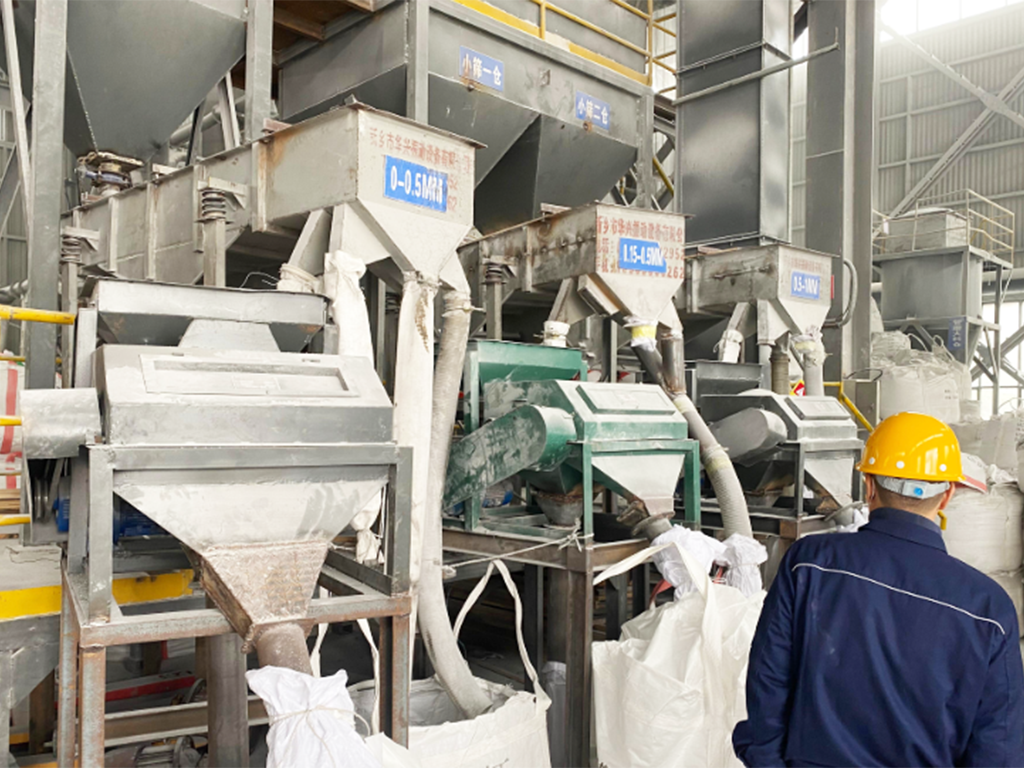
Scaling up from lab experiments to full industrial production means keeping things consistent across those massive multi-ton batches. The newer fluidized bed reactors have really stepped up their game, hitting around 95% uniformity when making synthetic zeolites compared to only about 78% with the old rotary kiln methods. Companies are now using real time X ray diffraction checks which actually finds defects nearly three times faster than before according to recent industry reports from 2023. Putting all these advancements together helps factories keep up with the rising need for customized zeolite products without breaking the bank on energy expenses either since they manage to cut down per unit costs somewhere between 18 and 22 percent overall.
Zeolite powder is primarily used in catalysis for petroleum refining, adsorption and emission control for VOCs and NOx, enhancement of reaction efficiency in plastics and chemical production, and industrial water treatment due to its high ion-exchange capacity.
Synthetic zeolites have consistent pore structures and higher acid site density, making them better for precise catalytic reactions. Natural zeolites are more cost-effective for wastewater treatment but have irregular pore structures, limiting some applications.
The key factors include particle characteristics, ion-exchange capacity, and catalytic efficiency, all of which impact yield, purity, and operational costs.
Zeolite properties can be tailored by adjusting pore sizes and acidity levels, and using machine learning models to predict performance in capturing specific compounds like nitrogen oxides.
 Hot News
2025-12-21
2025-12-15
2025-12-05
2025-12-02
2025-12-01
2025-11-19